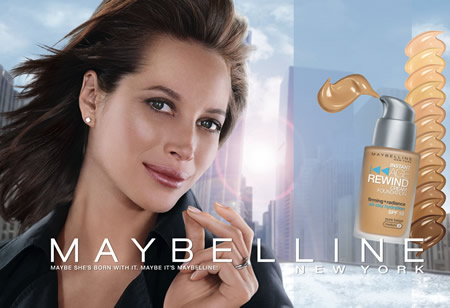
My discussion of private verses public lives in my past paintings with a particular interest in the lives and actions of the female have led to new plans and developments. How a woman would be more conscious about not wearing make up in public or being dressed in a certain way in public. I photographed friends in their "comfort zones"; make up free and in comfortable lazy day clothing. I collaged their images into busy public streets or shopping centres (a place which condones the competition between women with regard to outward appearances and the commercial idea of "beauty") and painted this onto board.
Now I am exclusively focusing on the idea of self image and focusing from the female perspective. According to the article Mo' Selfies, Mo' Problems? How Those Pics Can Chip Away At Your Self-Esteem by JUL 29, 2013 11:20 which can be found at
http://www.refinery29.com/2013/07/50626/selfies stated; "77% women would consider themselves ‘camera-shy,’ and 63% of women destroyed a photo they didn't like.” What I found frustrating when trying to photograph girls in order to then paint them was their reluctance to be photographed make up free. Perhaps this is a generational issue?
Jess Weiner, Global Self-Esteem Ambassador for Dove, a social messaging strategist, and CEO of Talk to Jess, has seen a considerable rise in self-esteem issues with the pressure to constantly be camera-ready. “I have seen a remarkable shift is self-esteem issues with the rise of the selfies," she says. "The pressure to be camera-ready can elevate self-esteem issues, with the pressure of commenting on posts and with the rise of social media. It has a more competitive aspect, and that can really put the pressure on.”
As a girl at the age of twenty years old who has entered the world of social media and attached at the hip with the new purchase of a smart phone, the notorious Samsung Galaxy s2 to be exact, I have exposed myself to a tsunami of confidence shattering images. Images that are here to help improve me, to help me make my cheek bones more refined, my eyes bigger, my eyelashes longer and fuller, my hair more fabulous, my eye brows more shapeful in order to compliment further my newely refined face. These images aim to help me transform my bone structure into something more "perfect" and not me. But it doesn't stop at the face, in order to confine with popular tastes I must use bronzing powder to shade abs onto stomach and a little extra to give me more cleavage. Scrolling through Facebook, Instagram, or Twitter it is hard to stay clear minded and refuse this as the idea of beauty. A quote keeps floating in my mind whenever I scroll past another one of these "helpful" guidelines to a beautiful face and body.. "god hath given you one face, and you give yourselves another."
Glass. Glass is a substance that seems common in every aspect of this craze. The idea of display, of being admired or judged from behind glass. Either the glass of a tv screen, a laptop screen, the glass lense of a camera, the touch sensitive glass of a smart phone through which these images are being filtered through. It is glass that holds the liquid that is going to help the transformation. And it is glass that is between you and the mirror you inspect yourself with before leaving the house each morning to face the public eye, to face the public judgement.
Young girls seek the internet to find advice to help subside their confidence issues. These forum topics range from problems with girls feeling unable to face the public eye make-up free, and it is the pressure placed from the commercial media that have warped the perception of normality especially focusing on the female body that influence these issues.
I plan on doing primary research by re-visiting the internet asking questions and gaining a broader knowledge into the minds of other females of my age and their opinions. I plan on incorporating the text from these answers into my art.
Glass has influenced me to try various things. I want to print this text onto clear acetate and place this into rectangular blocks of resin. I want to then photograph these pieces on the plane of the horizontal of the torso, so that it is visible through the text and resin. I am hoping the resin will warp the body shape behind it in order to bring light to the fact that their is beauty in everything, no matter what shape or shade.
I also want to scribe this text onto glass and photograph the body through it. I will also try this technique using light bulbs, writing in black around it and having the light shine through onto the body and photographing this ( parts of the body will be highlighted with light that has been filtered through these words before actually hitting the body, It would be more effective if I used words from the adverts created by the media that target these girls bodies). I will experiment with the camera with this idea. I want to do face shots which are lit up with this light. I may also try painting the body onto mirror, and scraping the words from the back so they are visible through the front. This idea also investigates the idea of narcissism as it would be of interest to see if people seek their own image first in the work before the actual painting. This tests the whole issue of body shape awareness. I will do paintings of the face as well as different blocks of the body. I will place these different parts of the body in such a way as to make them correspond and mirror the viewers body so that they can compare. or to see if they compare in the first place.
The text which I will gather from the online forums will also influence the photographic development aspect of my work. I wish to experiment with negatives and the dark room, by either scraping or painting on with bleach these words onto the negatives of pictures of the female figure and seeing how these turn out when developed in the dark room. I am going to try these using a color film before a black and white film.
I have many ideas for film, one of which involves masks, again referring to Hamlets quote "god hath given you one face and you give yourselves another". This I wish to incorporate in a surreal kind of horror manner. the idea with this film is go hard or go home. I wish to place 5 full length mirrors in a dark room with lights highlighting certain mirrors and certain aspects of the body's of the two girls I want to place in the middle. The girls will be as exposed as they are willing to be (its hard to get people who are willing to stand in front of a camera so exposed and vulnerable so this will be the challenging part). I want the girls to each pick up a white blank porcelain mask and turn to face each other, and paint "cheeks, contour lines etc" with dripping paint onto each others masks. This is more explored in an earlier post. The reason I want to girls to paint each others faces and not say.. a man.. (which most people would think I would do having probably reached the conclusion that I am a raving feminist.. which I'm not) is because having done a lot of research in the past two weeks I have discovered that is women who place this pressure on other women, not men (apart from the ones in the cosmetics industry that just need to sell their products and make money). It is of the opinion that women find competition in each other, and this is a strictly female issue which I wish to research for my essay this year to help with my studio work and make informed decisions based on the information I gather.
See http://www.youtube.com/watch?v=kMS4VJKekW8 for a Tedd Talk by Caroline Heldman.
More research and article links you may read if interested. Ive spent the majority of the last 2 weeks doing research and gathering information.
Bobbi Brown make up uses slogans like "pretty powerful" or "pretty inspriring".
In an article in the New York Times article by Catherine Saint Louis, “Up the Career Ladder, Lipstick in Hand.
"Brown’s campaign asks people to join in “empowering women and girls… with the confidence and resources to be their best.” Women want to be powerful, and they are. Women want to be confident, and they are. For many years to come, it seems make-up is and will be that resource women turn to for that boost.
So, we return to this recurring idea about make-up being use as a tool to represent a woman’s sense of power in self. It’s quite intriguing to me how this idea not only translates through scholarly and historical writings of American Studies, but also how this translates into the media, into business, into marketing, into bodies, into mentalities, etc.
But also, this beauty is still created through cosmetics. It’s still make-up, right? Are painting and enhancing two separate ideas? Or, are they the same both ways?"
-------------------------------------------------------------------------------------------------
Mirror Mirror: self portraits by women artists
Liz Rideal with essays by Whitne Chadwick and Frances Borzello
Pg 8 - Like Narcissus before (Nina Hamnett), Hamnett turned to the reflected image for access to an "other," a self defined in and through representation.
She took part ni the first all female self portrait exhibition in the Royal Albert Hall .
In second Sex by Simone de Beauvoir structured secual difference and self identification around the reflected image. "Woman/ sees herself in a glass".
Pg 17 "under this mask, another mask. I will never be finished carrying all these faces." - Claude Cahun, Aves non Avenus, 1930)
------------------------------------------------------------
http://www.careylovelace.com/articles/LisaYuskavage.pdf
---------------------------------------------------------
Dazed and confused articles;
1) http://www.dazeddigital.com/artsandculture/article/18694/1/how-to-sell-shit-to-women
2)http://www.dazeddigital.com/artsandculture/article/18662/1/laura-bates-everyday-sexism-how-to-be-woman-online
3) http://www.dazeddigital.com/artsandculture/article/18432/1/our-ten-favourite-digifeminist-artists
--------------------------------
Kaye Donachie's Malady of Death; http://deesartisticadventure.blogspot.ie/2014/02/kaye-donachies-malady-of-death.html
--------------------------------------
Video Idea as I wrote in my blog http://deesartisticadventure.blogspot.ie/2014/01/video-idea.html
-----------------------------------------------
Things you should know about the female article ; http://deesartisticadventure.blogspot.ie/2014/01/9-things-you-should-know-about-female.html
------------------------------------------
--------------------------------------
-------------------------------
------------------------------
-----------------
notes on Mirror images ; women, surrealism, and self-representation by whitney chadwick; http://deesartisticadventure.blogspot.ie/2014/02/notes-on-mirror-images-women-surrealism.html
-----------------------------
to see more visit my blog
http://deesartisticadventure.blogspot.ie/